Invited speakers
|
|
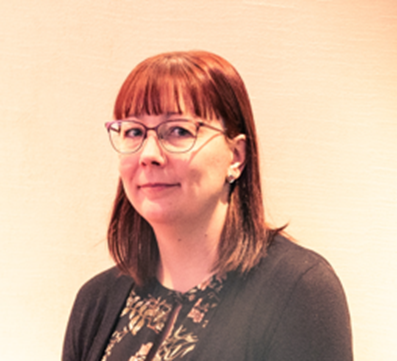
Marika KOKKO - Tampere University
Marika Kokko is a professor in bio and circular economy at Tampere University. Her research on microbial electrochemical technologies focuses on safe nutrient recovery and on production of biochemicals with microbial electrosynthesis and electrofermentation. Title of the presentation: “Bioelectrochemical nitrogen recovery from digested sewage sludge reject water” Abstract: Reject waters from anaerobic digestion of sewage sludge have high concentrations of ammonium-nitrogen (NH4-N), up to 6 g/L. Bioelectrochemical recovery of NH4-N from reject water was two- and three-chamber BES, and the two-chamber BES was scaled-up to 100 L. Furthermore, integration of membrane stripping to the BES cathode was studied, and techno-economic analysis of the (integrated) process was done and compared to existing NH4-N recovery technologies.
|
|
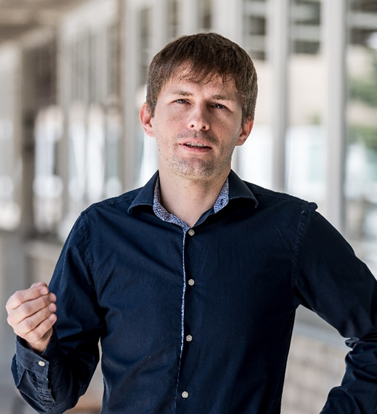
Grzegorz PASTERNAK - Wroclaw University of Science and Technology
Dr hab. inż. Grzegorz Pasternak is an Associate Professor at Wrocław University of Science and Technology in Poland. His research focuses on MFCs aiming to develop sustainable technologies for waste-to-energy conversion and environmental monitoring. Title of the presentation:"The synthesis and interactions of biosurfactants in bioelectrochemical systems" Abstract: Biosurfactants are known to shape microbiomes across various environments. In this talk, we focus on microbial fuel cells and the in-situ production of biosurfactants that enables energy-generating, self-sustaining synthesis. We’ll showcase strategies to boost their formation and explore how they affect biodegradation, electricity generation, and key MFC components. Discover how tiny molecules can transform both waste and device performance.
|
|
|
|
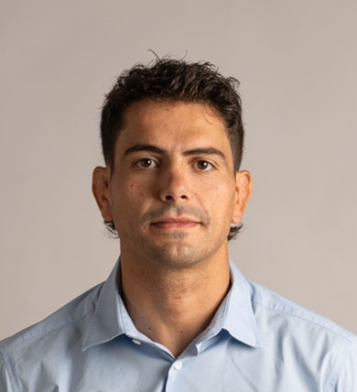
Marco ZEPPILLI - University of Rome Sapienza
Dr Marco Zeppilli is a tenure track assistant professor at the Department of Chemistry of the University of Rome Sapienza, his research activities are focused on the application of microbial electrolysis to the wastewater valorisation and groundwater remediation. Title of the presentation: “Bioelectrochemical chlorinated aliphatic hydrocarbons degradation: from the proof of concept to the field application” Abstract: Chlorinated aliphatic hydrocarbons (CAHs) groundwater contamination is a global concern. Bioelectrochemical CAHs remediation offers an interesting niche of application for BES in real scenarios, indeed, contaminant loads and concentrations require low current densities and not so stringent energy efficiencies. The present contribution gives a critical overview of the bioelectrochemical CAHs bioremediation from the proof of concept to full scale application.
|